6/08/2021

The best internet radio stations

There’s nothing more convenient than opening Spotify or Apple Music, launching your favorite playlist, and sinking back into the driver’s seat as you cruise to work. But where’s the human element in streaming media? Sure, the playlists themselves are shareable and curated, but there’s something unbeatable about the familiar jargon, jokes, and repeatable bumpers of internet radio stations and their respective DJs. Call us nostalgic. We can take it.

If you’re looking to keep up with the latest musical trends from coast to coast and the world over, your best bet is to use an internet radio station. You might not be sure which one you should listen to, but luckily, we do. This franken-hacked NES Power Glove instrument/robot is amazing.

Best internet radio stations at a glance

  • KCMP 89.3 FM — Minneapolis
  • WMOT 89.5 FM — Nashville
  • KCRW 89.9 FM — Santa Monica, California
  • WWPR 105.1 FM — New York
  • XRAY.fm KXRY 107.1 FM — Portland, Oregon
  • Dublab — Los Angeles
  • KUTX 98.9 FM — Austin, Texas
  • WFMU 91.1 FM — Jersey City, New Jersey
  • BBC Radio 6 — United Kingdom
  • WWOZ 90.7 FM — New Orleans
  • WQXR 105.9 FM — New York
  • KUSF 90.3 FM — San Francisco
  • Radio Free Brooklyn — Brooklyn, New York
  • NTS Radio — London
  • Radio Musical De Cuba — Havana
  • Cinemix — Seattle
  • BBC World Service
  • KEXP 90.3 FM — Seattle, Washington

    Seattle’s best public radio station, a partnership between the University of Washington and Paul Allen’s Experience Music Project, highlights the best new alternative music from around the globe. Best known for its live studio sessions, KEXP is often among the first major media outlets to showcase up-and-coming bands, making it a great place to hear new music before all of your Spotify-loving friends.

    ANDROID IOS

    KCMP 89.3FM — Minneapolis

    Owned and operated by Minnesota Public Radio (MPR), The Current is an adult-alternative haven for all things indie and local in the Minneapolis area. Curated by over a dozen DJs, you’ll hear everything from dirty shoegaze and surf rock to experimental R&B. Various segments intermix with music cuts, including interviews, book and movie call-outs, and livestreamed concerts.

    IOS ANDROID

    WMOT 89.5FM — Nashville

    Undergoing several format changes for the duration of its call-sign, WMOT 89.5FM is tried-and-true Nashville, broadcasting an array of listener-powered roots, Americana, and bluegrass music. Current programs include the nationally-syndicated Hangin’ and Sangin’, The String, and Bel-Air Drive. If you’re looking to get an authentic taste of the city that gave music its heart and soul, look no further.

    ANDROID IOS

    KCRW 89.9 FM — Santa Monica, California

    An NPR member station based out of the Santa Monica College campus, KCRW was founded in 1945 to train ex-servicemen in the then-emerging technology of radio. Now, it’s just a great place to find emerging music. Creators of the famed Morning Becomes Eclectic radio program, a show that highlights new music and live performances from talented indie artists, KCRW is an excellent place to hear well-curated musical selections, as well as to catch up on national news.

    IOS ANDROID

    WWPR 105.1 FM — New York

    Grace your ears with the latest bars featured by Power 105.1, one of the top hip-hop stations in the city that birthed the very genre. Power 105 is genuinely urban. The daily spin features a heavy focus on both mainstream and underground hip-hop and R&B with a splash of Latin and reggae crossover. It’s also home to several talk segments, but none bigger than the Charlamagne-hosted Breakfast Club, one of the culture’s most influential (and controversial) talk radio shows.

    IHEART IOS ANDROID

    XRAY.fm KXRY 107.1 FM — Portland, Oregon


    Portland’s most acclaimed independent radio station serves up the sounds of the city’s popular underground music scene to a global audience. A crowdfunded station formed in 2012, XRAY offers a varied selection of music and progressive talk radio programming and has been broadcasting around the clock for years now thanks to the help of nearly 70 part-time DJs.

    IOS

    Dublab — Los Angeles


    Dublab is an internet-only broadcast that showcases the cutting edge of the DJ universe five days a week. The station also offers each live show for download via its website. With a rotating cast of all-star DJs that includes world-renowned heavyweights like Daedelus, Teebs, Flying Lotus, and more, Dublab is among the best streams on earth for fans of emerging beat music.

    IOS ANDROID

    KUTX 98.9 FM — Austin, Texas

    Owned and operated by the University of Texas in Austin, KUTX showcases a range of genre-specific programming, from indie and pop to disco, Latin, and other genres. It’s an eclectic mix of shows, but they are each extremely vibrant and well-curated, making it an excellent place to find something new and unexpected.

    ANDROID IOS

    WFMU 91.1 FM — Jersey City, New Jersey

    WFMU is the granddaddy of them all. The longest-running independent radio station in the U.S. is also one of the best internet radio stations on the web. This listener-funded station offers a free-form variety of eclectic shows that are sure to provide something for everyone. Such free-form formatting can be a blessing and a curse, as some hours will prod listeners to tune in elsewhere.

    IOS ANDROID

    BBC Radio 6 — United Kingdom

    When it launched in 2002, BBC Radio 6 became the first new station created by the BBC in more than three decades. A digital-only channel that focuses on alternative music from all over the globe, Radio 6 plays everything from guitar music to dance, jazz, and soul cuts. Unfortunately, the BBC’s mobile apps are only available for those living within U.K. shores, but everyone else can just as well head to the website for a listen.

    U.K. only: IOS ANDROID

    WWOZ 90.7 FM — New Orleans


    For those who aren’t lucky enough to live in the Big Easy, WWOZ offers up the sounds of its fair city to the world, showcasing New Orleans’ famed jazz, soul, bounce, and R&B each day. The station’s selections center largely around the jazz tradition — which is still alive and well in the city — providing an amazing look inside one of the world’s most interesting and storied sonic universes.

    IOS ANDROID BLACKBERRY

    WQXR 105.9 FM — New York

    Among the finest — and most-listened-to — classical radio stations in the world, New York’s WQXR is also one of the oldest FM stations in the world. It’s among the best internet radio stations as well. Showcasing the best of composers new and old, it’s an excellent place to tune into when looking for some serious music for work or study. It’s also the perfect pairing for that nice bottle of red wine you have stashed away.

    IOS ANDROID

    KUSF 90.3 FM — San Francisco

    The extremely varied sounds of the Bay Area are best explored on KUSF, the University of San Francisco’s radio station. A glimpse of the region that delves deep into the complex communities that have thrived there for decades, KUSF’s programming is overtly Californian, providing listeners with warm-weather jams they’ll be hard-pressed to find elsewhere.

    IOS

    Radio Free Brooklyn — Brooklyn, New York


    A community radio station that’s run out of the basement of a bike shop in (you guessed it) Brooklyn, New York, Radio Free Brooklyn offers interesting independent programming, with a variety of interesting talk and music shows to take you through your day the Brooklyn way.

    IOS ANDROID

    NTS Radio — London

    Founded in 2011 by Boiler Room co-creator Femi Adeyemi, NTS Radio offers a massively diverse selection of live and prerecorded music, in a variety of genres, that is often curated by some of the most influential artists in the world. More than 200 hosts regularly appear on the station, whose slogan is “Don’t Assume.” Famed artists who have curated content for NTS Radio include Thurston Moore, Gilles Peterson, Peanut Butter Wolf, Floating Points, and more.

    IOS ANDROID

    Radio Musical De Cuba — Havana

    There’s nothing more fun and energizing than the sounds of Cuban music, and there is no better place to hear it than Radio Musical De Cuba, a Havana-based station featuring an assortment of constantly streaming Cuban sounds. Grab a cigar and a glass of rum, and prepare to enjoy the sounds of one of the world’s most interesting musical cultures.

    CMBF

    Cinemix

    Cinemix is an all-soundtrack station that exclusively plays songs from film and television. A listener-supported station that broadcasts from Toronto, the station highlights the excellent works of iconic film composers like John Williams, Hans Zimmer, and more.

    IOS ANDROID WINDOWS

    BBC World Service

    The BBC’s worldwide arm provides up-to-date coverage of notable events around the globe, as well as interesting interviews, travel, and sports segments. Fans of global politics will love the matter-of-fact way in which the BBC covers those topics.

    IOS ANDROID


    Source: https://www.digitaltrends.com/music/best-internet-radio-stations/

    My Honorable Mentions:

    1- NPR National Public Radio: News, Music, Podcasts... at https://www.npr.org/
    2- WNYC Radio: Local NPR station: News, Music, Podcasts...at https://www.wnyc.org/
    3- Soft Tracks Radio: Adult lite rock radio...at https://www.soft-tracks.com/
    4- Lite 106.7 FM Radio: Adult lite hits radio....at https://www.iheart.com/live/1067-lite-fm-1477/
    5- Beatles Radio: songs from the Beatles & solo...at https://www.beatlesradio.com/
    6- Beatles at 181FM: songs from the Beatles & solo...at https://tunein.com/radio/181FM-Beatles-s113658/
    7- Beatles on iHeart Radio: songs from the Beatles & solo...at https://www.iheart.com/artist/the-beatles-591/
    8- Classic Rock hits on iHeart Radio: at...https://www.iheart.com/live/the-classic-rock-channel-4426/
    9- The Vinyl Experience on iHeart radio: songs that changed the world...at https://www.iheart.com/live/the-vinyl-experience-6878/
    10- Singers & Songwriters on Pandora: pop hits...at https://www.pandora.com/station/play/4696058135796382025
    11- Country Songwriters on Pandora: Country songwriters at: https://www.pandora.com/station/play/2711313674583113124
    12- WSUS Sussex NJ radio: Adult lite 80's+ hits radio...at https://www.iheart.com/live/1023-wsus-1377/


    5/22/2021

    In a Crisis, Radio Should Be Bigger Than Ever — So Why Isn’t It?

    04-21-20 - Terrestrial music stations have a major cultural opportunity right now, but employees say a muddied strategy is standing in the way.

    Radio personality Kevin Ryder was “baffled” by KROQ’s “cold, heartless attitude” when he and his morning-show team were fired at the end of March. The station has long been an alternative/rock staple in Los Angeles, the second-largest market in the country, and Ryder had been on the air for more than 30 years.

    “The new people in charge now weren’t here for the building of the world-famous KROQ,” Ryder, one-half of the popular Kevin & Bean Show, said on air when the station let him go, live one final time. “I don’t think it means anything to them. It’s a numbers business, and there’s no family aspect to it anymore. It’s only numbers, but this place was built without numbers. It was musicians, artists, and the special relationship between music, the station, and our fans.”

    AM/FM radio provides localized, round-the-clock information and entertainment via friendly neighborhood voices — so in theory, it’s the perfect platform in a global crisis that forces hundreds of millions of people to stay home. But Ryder is one of many in the radio community — including on-air hosts, music directors, program directors — who have been shocked by sudden job losses in recent weeks as COVID-19 has spread across the U.S., and news out of the industry has been one bad thing after another. Why is terrestrial radio missing the opportunity here — and how should it be fighting to get back on top?

    The familiarity gap

    In response to the pandemic’s shutdown of live events and many other industries across the U.S., leading radio conglomerates iHeartMedia and Entercom (which owns KROQ) announced widespread firings and furloughs.

    Multiple sources who either currently work or recently worked in radio told Rolling Stone they believe the KROQ firings were a branding face-lift a long time coming. KROQ has long been looked at as a relative anomaly in the alternative-radio format: “It was almost its own format with a sound that leaned more rock and didn’t match the current pop/hip-hop-leaning landscape,” one radio industry employee says. “Now, it’s basically just flipping to match every other alternative station, which is what Entercom wanted and Kevin Weatherly [the former program director, who left Entercom in February for Spotify] seemed to be protecting it from.

    Entercom’s CEO, David Field, tells Rolling Stone those firings were indeed unrelated to the coronavirus — and that local decisions are made by local management depending on how programs perform. “The ratings on the show post-Bean [Gene “Bean” Baxter left the show last year] were not where they needed to be, so the decision was made locally that it was time for change, and time to rebuild a new show that would hopefully garner higher ratings,” Field says.

    But the timing of many of these company cuts — which Field admits was unfortunate in the case of KROQ — may be rattling audiences’ familiarity and contributing to radio’s shakiness. “I was really looking forward to your show during these uncertain times to help keep me grounded and to help ease my anxiety for a few hours each day,” one of Ryder’s fans wrote on Twitter. “What brilliant timing!” another tweeted. “Who wants to hear a familiar voice on the radio during a pandemic?!? Idiotic.”

    Bay Area radio figure Aaron Axelsen was told to leave his position as music director and on-air personality at San Francisco’s Alt 105.3 after 23 years with the station. “My termination was based 100 percent on the COVID-19 budget cutbacks,” he says. “This just kind of comes with the territory, though. That’s the nature of the game, and we understand and accept that going into it.”

    Axelsen says there comes a point when heritage personalities need to move aside, be grateful for their run, and make room for future talent and fresh perspectives. “Sometimes it’s necessary to reinvent,” he says. “Any time you’re going to get rid of a heritage personality, it’s always gonna be met with resistance. [But] there is the importance of radio personalities in a time of crisis — when your audience is looking for comfort. It takes a while to brand and develop new personalities. It can take years to build up the trust that people have with these long-running personalities in their markets, so I think the timing’s really unfortunate.”

    While music fans faced with a sprawling field of streaming options may not need music radio, many in the radio community would argue that they do still need their DJs. “You can hear your songs everywhere, but these personalities that you listen to and grow up with can be the calming, soothing voice to help you feel better, escape, or give you information and news,” says Keith Dakin, the vice president of programming for a smaller radio company that owns about 14 stations on the East Coast. “I 100 percent believe that. It’s who you want to turn to in times of crisis. I grew up in the Eighties. When there was news, I wanted Tom Brokaw to tell me the news, because I grew up with Tom Brokaw. These people become your friends. We do perceptual studies and research studies, and people say, ‘Oh, they’re like my family. They’re like my co-workers.’ Making changes now is bad for your brand, because your listeners are used to these DJs and they’re looking for the DJs they love.”

    Where is the flexibility?

    Radio reaches more than 90 percent of the U.S. population, according to Nielsen, but the definition of “reach” is murky: The metric doesn’t account for passive background exposure, and it isn’t broken up to illustrate the amount of active engagement. According to Edison Research, AM/FM radio listenership was down 5 percent from 2017 to 2019, when it came to audio sources used most often in the car — while usage of SiriusXM, online platforms like streaming, and podcasts had all increased.

    Revenue for terrestrial radio advertising has decreased every year since 2015, per research out of PwC, suggesting that the medium as a whole has become less significant to the general public. (Radio companies have also been on shaky financial ground for a while: the 850-station iHeartMedia, for example, filed for bankruptcy in 2018 as part of an attempt to restructure and reduce its billions in debt, then announced mass layoffs in more “reorganization” last year.)

    But what if radio could pivot away from background listening and toward a more situation-based format, engaging listeners on whatever’s relevant at that particular moment? Terrestrial radio has the unique ability to freewheel — so insiders say DJs should be allowed to change course at a moment’s notice to best serve their communities. Radio personalities are able to get updates while they’re live on the air, which is not possible with prerecorded satellite radio shows or podcasts. These personalities have the advantage of being able to adjust with agility and express real emotion as it bubbles up.

    “People are gravitating towards things that feel familiar because there is so much comfort in that. But that’s not enough — it depends on what they’re saying!” says Alex Gervasi, a popular radio personality who had spent 10 years at iHeartMedia, and six of those at KIIS in L.A., before being let go as part of the massive iHeart layoffs in December. “We’re witnessing another culture shift away from things and people that are superficial and towards those who are authentic and self-aware. It’s not enough to be just positive and upbeat anymore. Are you being vulnerable? Are you listening to the pulse of your community and the people in your community that might have struggles that look different than yours? You’ll have a hard time connecting if you aren’t listening first.”

    “Now’s the time to experiment,” Dakin adds. “All of our stations are playing way less commercials because there’s not as much advertising right now. I’m playing all ‘songs that you can sing along to’ at five o’clock on my AC station. One of our stations on Long Island is [providing] fake ‘live’ concerts, since there aren’t concerts anymore — so it’s tracks from the [Red Hot] Chili Peppers’ live albums. We’re doing zanier stuff. And I’m gonna have my afternoon guy on Star talk about news, when he usually talks about Lady Gaga’s new song. On all of our stations we put news updates at the top of every hour.”

    In the specific time of COVID-19, new updates from government leaders and health officials barrel in by the hour — so radio becomes an even more vital medium for communicating all that. “The average person has no idea if they legally have to wear a mask or not,” says KROQ’s former morning-show producer Jay “Lightning” Tilles, who left radio altogether in 2018 after 27 years at the station. “This would be a time that I would want my DJ to say, ‘Hey, just FYI, here’s what the mayor said,’ and then have a debate about it. I’m not saying that’s not a conversation that’s happening, but it [previously] would have been happening through every morning host. They would have all been talking about it.” Dakin, too, recalls DJs pivoting to 24/7 news channels during previous moments of a national crisis, like Sandy Hook and Hurricane Sandy.

    The importance of the local

    Radio started shifting from local to national years ago: In smaller markets, you might still have a local DJ who covers the opening of a neighborhood restaurant or a hospital in need of supplies, but the larger markets like L.A., New York, and Chicago have become hubs of syndication. “They wanted to be everything to everyone,” says Tilles.

    “The one major advantage [terrestrial] radio has is that it can be hyper-local,” he points out. “They can talk about the opening of a shoebox on the corner of La Crescenta, and they have the agility to do that. They can broadcast from out of their car, as many of the DJs used to do when cell phones were invented. That’s not happening anymore, and you’ve noticed it as a listener.”

    Moreover, when a station personality is told to represent multiple markets, that can make it harder for the station to solidify its own identity. And, on a broader scale, it makes it harder for the medium to stand out from satellite radio — a platform that was made so that anyone anywhere could access the same stations — or the Spotifys and Pandoras of the world. Homogenization can occur through the content that’s presented and the music that’s played.

    “I always made a point, when I was on the air, to talk about growing up in the East Bay or going to this [nearby] club or taco shop,” Axelsen says. “I tried to promote things that were relevant to them — things that help the music community. I tried to provide information about local venues, promoters, DJs, and artists that were struggling: ‘Here’s how you can help.’ ”

    Dakin says one of his stations just raised $10,000 to buy restaurant gift cards that they’re planning on giving to hospitals. “All that money came from the listeners,” he says. “People want to help and radio is good for that.”

    The dissipation of localism wasn’t something that happened overnight. “As Weatherly used to say, it’s ‘death by a thousand cuts,’ ” Tilles points out. “It was something that happened every time the station was sold and traded hands, and the people who took it over cared a little less about the culture and what made it special. It also had to do with them wanting to use its identity to help sell other stations’ commercial inventory.”

    “They want to be able to both program all of their stations and sell all of their stations universally — meaning that one person would oversee all of [one company’s] alternative stations,” says Tilles. “You’re also seeing a homogenization — or a scaling — of sales. If I’m calling Budweiser and I want to sell Budweiser 117 radio stations, and the only one they actually care about is KROQ, but I can’t sell them KROQ? Well, that’s a problem. So, over time those barriers are removed, but those barriers may have been the brand-protection agents that worked within the company, that held on to the culture that made that station an anomaly.”

    In a 2019 Statista survey of the reasons for the decline in radio listening in North America, 41 percent cited other audio options as the main factor for leaving radio behind. The very last reason to listen to radio less was a lack of local information (five percent) — which implies that people don’t have issues with receiving local information, and they may even like it.

    Radio companies have publicly spoken about decisions to pursue a balance of local and national — with some believing that a 24/7 cycle of live and local news updates should be saved primarily for news/talk stations, which are largely found on AM airwaves. Field, Entercom’s CEO, suggests terrestrial radio can be home to many things — local content, but also podcasts, on-demand, and syndicated programming, as well as the development of a one-stop-shop platform like radio.com. He says he’s looking at a “broader audio business” that can be delivered both digitally and terrestrially.

    Could branching out in so many ways confuse the consumer, though? Field doesn’t think so, and says the double-digit growth in radio.com’s total listener hours and monthly average users would support the success of the multipronged strategy.

    Feet on the streets

    Large street teams are a thing of the past. But one of the most unique and impactful things a radio station can do is stake a physical presence, radio veterans say. Radio’s dwindling physical connection in the pre-COVID era may have set it up for failure, especially because it’s not possible to make up for that physical contact now. “The physical element of the radio stations — where you would go out, meet a DJ, and drop off canned food or masks or whatever you have — those things have all kind of dried up,” says Tilles. “They try to do everything digitally, and you can’t help people digitally these days in a time of crisis like this. Terrestrial radio is not doing the one thing that sets it apart.”

    “We go to charity events. I really think that’s the only way radio can live,” Dakin says. “You gotta go to a million events. You gotta host every charity event that they ask you to. It’s a political campaign. The best jocks and the best radio stations are out all the time meeting people.”

    In trying to compete with streaming services, satellite radio, and podcasts, terrestrial radio seems to have lost something of its original mission: Familiarity, flexibility, localization, and interactivity. When considering the future of the medium — whether during the ongoing crisis or afterward — veterans warn of not losing track of those original distinguishing features. “These personalities are so key to helping terrestrial radio,” says Axelsen. “They differentiate it from myriad other algorithm-driven music platforms. A good radio personality is a good narrator, someone you emotionally connect with or disagree with. That’s a tour guide.”

    Radio conglomerates do show signs of wanting to adapt and pivot. Recently, for example, companies have announced pay cuts in their executive tiers to help alleviate the economic fallout of the pandemic on their operations. “We want our shareholders to know that we have taken immediate and proactive steps to weather this crisis,” iHeart’s CEO, Bob Pittman, last week said in a statement accompanying news that the company would cut $250 million in costs, due in part to senior managers taking voluntary decreases in compensation.

    “Like virtually every business in America right now, we are dealing with an unprecedented, massive challenge that is hammering the amount of advertising dollars, because so many of our clients are closed right now,” says Entercom’s Field, who approved a 30 percent reduction of his own salary. “That creates an imperative for us to significantly reduce expenses. We’ve reduced salaries across the company for anybody making more than $50,000. We have suspended our 401(k). We’ve done a whole bunch of things to cut back on expenses to try to minimize the amount of layoffs. But due to the magnitude of the challenge, we had to make significant cuts.”

    The radio business hasn’t specified how those savings will translate into strategy, though. In time, we’ll see whether companies take strategic action to re-endear themselves to listeners — and whether these changes are enough to help the industry ride out the crisis.


    Source: In a Crisis, Radio Should Be Bigger Than Ever -- So Why Isn't It? - Rolling Stone


    What’s behind the boom in iconic boomer musicians selling their songs

     Baby Boomer rock icons Paul Simon, Bob Dylan, Stevie Nicks and Neil Young have sold all or portions of song catalogs in recent deals.

    Acquirers are using record low-interest rates to fund music rights acquisitions they expect to generate higher investment returns in the future. “It seems like anybody that has a relationship in the music business that knows anybody is trying to raise money,” says Larry Mestel, CEO of Primary Wave Records.

    For boomer musicians, estate-planning is key, like it now is for many members of America’s wealthiest generation.

    From Bob Dylan plugging in his electric guitar for the first time to Super Bowl commercials, there have always been moments in music history when the most die-hard fans will accuse their idols of doing the unthinkable: selling out. But right now ”’selling out” has a new connotation, and it is a boom market for both investors and superstar recording artists.

    A wave of boomer rock icons are selling out of their song catalogs. The moves, the latest of which was made by Paul Simon last week, point to a straightforward truth about the intersection of art and money: Music has always been a business, and one where creative genius deserved to be rewarded with riches. And it is a business that right now is seeing major changes caused by streaming, and further disruptions caused by the pandemic. The deals from Paul Simon, Bob Dylan, Neil Young (in Young’s case a 50% stake) and Stevie Nicks (80% of the rights to her songs), highlight major trends in the entertainment industry, capital markets and wealth management.


    Music publishing companies like Hipgnosis Songs Fund and Primary Wave Music, and conglomerate players like BMG, Sony, Warner Music Group and Vivendi’s Universal Music Group, are buying up premier song catalogs in big deals fueled by record low interest rates with the belief there will be more lucrative returns in the future from selling the rights to these songs across entertainment platforms.
    Record low rates fuel music deals


    Larry Mestel, CEO of Primary Wave Music, the company that just acquired a majority stake in the catalog of two-time Rock and Roll Hall of Fame inductee, Stevie Nicks, told CNBC the economic environment that the Coronavirus pandemic has created has worked in favor of companies looking to purchase large assets. These low interest rates make it easier to borrow money, and high rates of return have created a perfect opportunity for acquirers.

    “You’re talking about a low interest rate environment and you can achieve a 7% to 9% ... and then increase that through marketing and generate mid-teen returns. That’s a very attractive place for people to put money,” he said.

    Music catalogs also have proven to be recession-proof, and the pandemic has only heightened the amount of deals being made as the music industry goes through a massive disruption caused by the shutdown of live venues and touring.
    Streaming music’s rise


    The deals also come at a time when streaming music — for all of its controversy and skepticism on the part of the musicians themselves about getting a raw deal — has proved to be an economic juggernaut, at least for the record companies. In 2020, Goldman Sachs forecast that global music revenue would reach $142 billion by the end of the decade, reflecting an 84% increase when compared to the 2019 level of $77 billion and streaming capture 1.2 billion users by 2030, four times its 2019 level, and primarily benefiting companies like Sony, which bought Simon’s catalog, and Universal, which acquired Dylan’s songs.
    VIDEO01:24
    Universal Music buys entire catalog of Bob Dylan’s songs


    Global streaming music revenue hit an all-time high as percentage of the industry last year (83% according to a recent report) and it favors the superstars, too. Spotify has said its mission is “giving a million creative artists the opportunity to live off their art,” but as a recent New York Times analysis noted, Spotify’s data shows only about 13,000 generated $50,000 or more in payments last year.

    It’s not just streaming, though. The rights to bigger acts catalogs, once acquired, can be used in sync placements that license music across various forms of media, including film, television shows, advertisements, and video games.

    “From a publisher’s perspective, it is extremely valuable to obtain the rights to a certain catalog that we can pitch for synch,” said Rebecca Valice, copyright and licensing manager at PEN Music Group. “A catalog can do its own pitching just because of its legendary success.”
    Valuing rock icons


    The more recognizable a catalog is, the more valuable it becomes for companies to purchase and use in movies or television. The best catalogs “pay for themselves” over time, she says, as synch helps recoup the money acquirers spent “and then some as time goes on.”

    “I do believe that the icons and legends are worth more than the other artists,” Mestel said. Primary Wave owns the catalogs of stars like Whitney Houston, Ray Charles, and Frankie Valli and the Four Seasons.

    Some famous musicians of the boomer era have lashed out at the situation the industry has placed them in, such as David Crosby, who said in a tweet in December, ” I am selling mine also ... I can’t work ... and streaming stole my record money ... I have a family and a mortgage and I have to take care of them so it’s my only option ... I’m sure the others feel the same.”

    He sold his entire catalog to Irving Azoff’s Iconic Artists Group in March, which had also recently acquired a controlling stake in The Beach Boys’ intellectual property, including a portion of the song catalog.

    “Given our current inability to work live, this deal is a blessing for me and my family and I do believe these are the best people to do it with,” Crosby said in a statement announcing the deal.
    Boomer generation estate-planning


    For the musicians themselves, there is a mega trend at work: the estate-planning needs of America’s wealthiest generation. Boomer musicians (and those born just on the cusp of that generation’s start like Simon and Dylan in 1941), just like their fans, are aging. “Artists are getting older now so they can use cash, they can estate plan,” Mestel says.

    Of course, the downside can be loss of control over an artist’s most precious asset: the creative genius that made their careers.

    “These aging rock stars may want to cash out to provide for their estates ... but you lose control of your brand and your legacy, to some extent, depending on what protections you put in place as part of the deal,” said John Ozszajca, musician and founder of Music Marketing Manifesto, a company that teaches musicians how to sell and market their music.

    Crosby and Azoff have been friends for a long time, a point Azoff made in the release announcing the deal.

    It seems like anybody that has a relationship in the music business that knows anybody is trying to raise money.
    Larry Mestel
    PRIMARY WAVE RECORDS CEO


    Some fans aren’t too happy about hearing hits like Nicks’ “Edge of Seventeen” or Dylan’s “Like a Rolling Stone” selling cars and clothes — though Dylan has done multiple Super Bowl commercials dating back many years for GM and IBM, and his songs have been featured alone in others — but the decisions to sell catalogues can also help musicians avoid posthumous legal battles like the estates of Tom Petty, Prince, and Aretha Franklin had to endure.

    BMG acquired the catalog interests of Nicks’ bandmate, Mick Fleetwood, of Fleetwood Mac early this year and noted some stats in its announcement that show that as old as boomer acts may be, they can get renewed life from viral streaming hits. The Fleetwood Mac song ‘Dreams’ generated over 3.2 billion streams globally (during an eight-week period September 24 to November 19, 2020) due to a video with a cranberry juice-loving fan, and introduced a new generation, more accustomed to TikTok, to Fleetwood Mac. The band’s album “Rumours” reached No. 6 on Billboard’s Streaming Songs chart 43 years after its release.

    Dylan’s deal is the biggest reported so far, estimated at $300 million though no sale price was officially disclosed and Universal only said in a release it was “the most significant music publishing agreement this century.”

    Mestel believes the boom isn’t nearing an end.

    “It seems like anybody that has a relationship in the music business that knows anybody is trying to raise money. But that doesn’t mean that they can go out an identify assets to sell or even know what they’re doing.”

    BMG and private equity giant KKR recently signed a deal to go out and make a major musical rights acquisition, and as one executive told Rolling Stone, “We’re not chasing hits from January 2021. We’re looking at repertoire that’s proved itself about being part of our lives.”

    KKR has been in on big music deals in the past, and the trend of buying rights is not new, but the current boom is notable, and fits within the asset class appreciation taking place across so many parts of the market as investors seek more ways to put their money to work. While the boomer deals are the biggest headlines, recent acts are seeing big paydays as well. Earlier this year, KKR bought a stake in the catalog of OneRepublic’s Ryan Tedder for a reportedly high sum.

    Companies like Primary Wave are working with artists like Nicks to try and keep them as part of the deal, and make that deal even better for them in the future, according to Mestel, who says many didn’t understand that they could enter into a partnership, sell a piece of their catalog, and that piece potentially become more valuable in the future than the 100% they owned before.

    “If all goes well, [artists] get the most out of what they’re trying to sell it for, and it’s usually a win-win scenario for the buyer and the seller,” Valice said.

    Source: Why there's a boom in boomer rock stars selling their songs (cnbc.com)

    2/14/2021

    How the Decline of the Compact Disc Is Killing Music


    Goodbye CDs

    I recently bought a new Jeep, and I absolutely love it. It looks awesome, and it has knobby tires and four-wheel drive that comes in very handy where I live. It has countless gadgets, mostly controlled by a touch screen on the dash. It has a computer that monitors everything from oil life to tire pressure, and it has a GPS system to tell me where I am and where I am supposed to be going. It has heated seats, and it has a cool backup camera to prevent me from accidentally running stuff over.

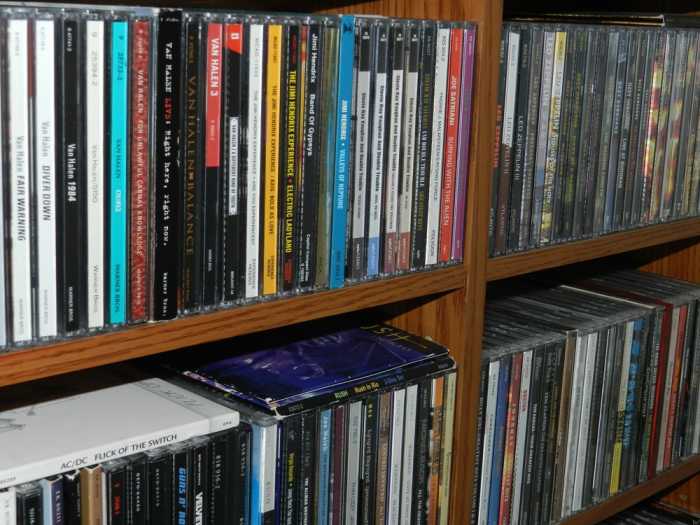
    But do you know what it doesn’t have? A compact disc player. It has USB ports and an SD card reader, and it has Bluetooth and an aux-in jack, but not a CD player. While this doesn’t make me love my Jeep any less, and I know it has become the standard on most vehicles, it is a bit frustrating. I don’t know exactly how many CDs I own. Certainly, there are many hundreds, if not over a thousand. They are all now useless in my new vehicle.

    Apparently CDs just aren’t cool anymore. This move by car companies is a reflection of a trend in society in general. People don't buy CDs the way they used to, and why should they when there are other, more convenient ways to buy and store music?

    But for me, the decline of the compact disc isn’t just annoying. I think it’s an indicator of a much greater problem that won’t be fully realized for a decade or more. And, when it eventually comes down, it will hit music lovers hard.

    In this article, I’ll try to explain why I’m not just frustrated by the move away from compact discs, but downright frightened.

    Technology Marches On

    Before I had a big CD collection, I had a big cassette tape collection. Again, I had hundreds of them. Maybe twenty-five years ago I started trading them in and replacing them with CDs. Before cassettes, people collected vinyl records. I only had a couple of those, but I do remember when most home stereo systems came with a record player. I also remember the 8-track boom when I was a kid, which was but a flash in the pan.

    Technology changes and advances, and generally that’s a good thing. As tough as it is to find a compact disc player in a new car these days, it’s a whole lot tougher to find one that has a cassette player. It’s unrealistic to expect CD technology, or any technology, to exist forever.

    Today, digital music is the thing. You don’t need to own a physical version of the music. You can download the MP3, store it and play it when you feel like it. You don’t even need to buy the whole album if you’d rather buy just one song, and you can carry many hundreds of songs with you on one small storage device.

    In a lot of ways that’s pretty cool. Consumers have more choices and can move more quickly when they want to make a purchase. Bands are able to get their music out there to more people. But in other ways, I think, this model will eventually damage music as we know it.

    The problem isn’t that compact discs are going away. It is that they aren’t being replaced by another physical, durable medium. Digital music, stored in the cloud or even on your own personal hard drive or storage device, has an inherently short shelf life. When technology changes again, when you change computers or when you delete a user account, you may make an effort to retain some of the music you like, but much of it will be gone forever. There are no physical copies to stand as a record that it ever existed at all.

    If music isn’t important to you, you probably don’t care about this. If you are like the typical consumer you buy music on a whim and have no particular allegiance to any band, artist or genre. Music is just something in the background to distract you when you aren’t thinking about Dancing with the Stars.

    But if music means something to you, or if you think art and culture with substance and value should matter, this is really bad news. To me, an album by a band I love is something I want to hold in my hands and cherish. If my hundreds of CDs were stored on my computer instead of sitting on my shelf it wouldn’t be the same.

    Music matters, and it should be preserved for the future.

    Music matters, and it should be preserved for the future.

    Why Physical Music Matters

    If you were a Beatles fan back in the ‘60s you probably bought the Sgt. Pepper’s Lonely Hearts Club Band record when it first came out in 1967. I’d bet a lot of Beatles fans still own those same original albums they spent their pennies on way back then. It still exists in physical form, even if it is stored in a box somewhere. And, if you go out and find a turntable, you can still listen to it.

    If you are a bit younger and you were a Beatles fan back in 1980 you probably bought Sgt. Pepper on cassette. If you are younger still, in 1990 you likely bought the album on CD.

    Heck, there are probably a lot of people who own Sgt. Pepper on vinyl, cassette, and CD, having upgraded each time technology changed. Many copies of each of those still exist, somewhere. They are physical things you can touch and hold.

    But the next generation who buys Sgt. Pepper will do so in a digital format. Where will that digital copy be in ten, twenty or thirty years? Chances are it will not exist, and least, not your version that you downloaded.

    The Beatles are one thing, but what about a new band who releases their first album today? If most of their music is sold in digital format, where will those albums be in the future? It simply isn’t possible to hold on to a collection of music in digital format for years and decades the way you could with vinyl, cassette, and CDs. If you hope to do so, you are depending on a range of unlikely variables.

    So what if I lose my Sgt. Pepper album when my computer explodes or technology changes, you might be thinking. Surely there will be versions of an old album in new formats just like there were in cassette and CD. You can just buy it again.

    You’re right. Beatles albums will probably be offered in the most modern formats until the end of time, but that’s not true for all bands. It’s nice to think that record companies would continue to offer a band’s music in new formats for anyone who wants it, but if the money isn’t there surely they won’t bother. There will be songs, albums and entire bands that end up completely lost to time.

    That happened with other formats too. But the difference was if a band released a vinyl record album back in 1965 and it was never released on cassette tape or CD, at least copies of the vinyl record are potentially still around. Even though some rare or old albums are no longer printed in any format, if you put your mind to it you could buy an old one on eBay or from a collector if you are lucky.

    That won’t be true of digital music. Record companies will decide what music lives and dies based on popularity, which is what they’ve always done. But, without physical copies, the fans of future generations will miss out on a lot of great music that didn’t make the cut. It will simply be gone.

    This will hit fans of more obscure genres like metal, jazz and classical especially hard. If you are a casual pop music fan, again, you probably won’t care. However, I like to think maybe you'd care simply because the loss of so much great music will make the world a worse place.

    Your Music in 20 Years

    If you buy an album in digital form today, do you expect to still own it in twenty years? If so, you are banking on some pretty unlikely events. You need to hope that in twenty years there is still some program or service that plays whatever format your music is stored in. You’re going to have to hope whatever technology you are storing it on remains viable, intact and free of viruses, and that you remember to back everything up correctly and transfer it over each time you change computers or devices.

    If you are storing your music online or in the cloud, you need to depend on those services being around in twenty years, and you need to hope they don’t have some kind of problem or disappear overnight. You are going to have to hope that, if something bad does happen, there is still some version of your music out there for you to replace your lost copy.

    To be clear, digital music technology is a good thing. It’s good for new bands, it’s good for established bands and it’s good for the consumer. It makes things easier for everybody, and if you are an unsigned band there has never been a time in history when it is more possible to get your music out to more people.

    But it lacks a sturdy vessel, and that’s a big problem. We can’t rely on hard drives and the ubiquitous “cloud storage” to protect our music and culture for years or decades to come. Unless this changes, in twenty years there will be a lot of music you remember from years past that you simply will not have access to anymore. It may exist somewhere, in the digital vault of some record company, but as far as the public is concerned it is gone.

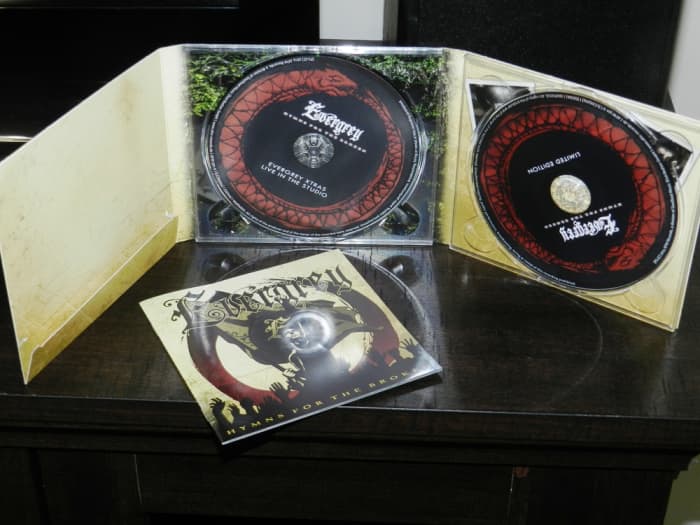
    Personally, I like the idea that I can remember a band from my high school or college days and still easily find their music. And, for me and I know many others, it’s also about more than just the audio portion of an album. I love the album art, leafing through the liner notes and song lyrics and all the other great stuff that came with a CD or album. With digital music, all of it is gone and that’s really sad.

    Physical albums have value beyond the audio. Bands like Evergrey give us a product we can cherish for life.

    Physical albums have value beyond the audio. Bands like Evergrey give us a product we can cherish for life.

    What Can We Do?

    I was wandering around a thrift store the other day, checking out their shelves of second-hand CDs. Somebody had once thought it was a good idea to purchase each of those albums but has since decided they didn’t want them anymore. So, they sold them to the thrift shop, where another person can pick them up for a dirt-cheap price. The music lives on, for another generation.

    If they were digital albums, the original owner would have simply deleted them when they were sick of them. What a crime. Is there any way to change this way of thinking, and would we even want to?

    In my 30+ years as a musician, I have come to the unfortunate conclusion that trying to create any logical change in mainstream culture is like trying to stop a hurricane with a desk fan. The vast majority of people simply don’t care about what will happen in twenty years. As consumers, they want what is cheapest and easiest, and in some ways that’s understandable. They will continue to download songs for a few bucks a pop and the music industry will continue to give them what they want. Expecting people to wake up and figure out the damage this could do is unrealistic.

    So, if you do happen to care about music, what can you do? For me, the answer is to continue to buy CDs until another form of physical album comes along. I might not be able to play them in my car, but at least I’ll still own them in 20 years. Like vinyl records today, there will likely still be a way to play them.

    If you do choose to buy only digital music, you need to come up with a safe way to store it, controlled completely by you. I’d have a system of dedicated flash drives, and probably backups of those. If the only copy of the music is on your phone, you are asking for trouble.

    As for my Jeep, I will probably convert some of my CDs into a digital format so I can listen to them while driving. I’ll have to download them onto my computer and move them over to flash drives or SD cards I guess.

    All that seems like a big hassle and something you shouldn’t have to do just to listen to music in your car. There should be an easier way. Like, maybe some kind of disc you could just slide into a player on the dashboard.

    Yeah. Somebody ought to work on that idea.

    Do You Still Buy Compact Discs?

    Comments

    KCrusty on July 31, 2020:

    I have a lot of CD's as well ...maybe only a few hundred or less. But like you mentioned, Once you move to another format, how many times are you going to pay for the licence to listen to what you already own if you copied all your cd's to a PC hardrive And you move to a new PC your media player will require a licences in order to play it. if you don't have a hard copy then your out of luck. But most people won't care about preserving their old collection

    Jon Meltzer on February 10, 2020:

    As long as I can keep getting CDs for $1 each at library sales because all the hipsters are dumping them for vinyl, I'm going to keep buying them.

    Hell, I remember when vinyl was "worthless". Good thing I saved most of mine then so I can resell it now :-)

    Source: https://spinditty.com/industry/How-the-Decline-of-the-Compact-Disc-is-Killing-Music